
Kolkata trams -- now in their 150th year -- are the last to survive modernity in Indian cities, writes Ishita Ayan Dutt.

'Professors can teach even when they are 90 because they don't lose their skill with words. Go deeper and there's spirituality in it.'

The tea industry's cup of woes brimmeth - scanty rainfall and pest attacks have dragged down production in May, prices are lower than last year, and demand from some export markets is muted. Production in North Bengal - comprising the Dooars, Terai, and Darjeeling - is majorly affected; parts of Assam are also hit. Arijit Raha, secretary general, Indian Tea Association (ITA), said that the Tea Board numbers for April show a crop loss of about 9 per cent for North Bengal, compared to last year.

'We need to find out whether any structural element has got fatigue.' 'We want to increase the lifespan of the bridge.'

'It's an open secret that the UK business is structurally not in a great place.'

The recent India Art Fair in New Delhi generated greater interest than before in local contemporary artists among a growing cohort of Indian collectors, including millennials. But growth in Indian art is not restricted to that alone. This year saw 91 exhibitors, a much higher number than 63 in the previous edition - indicating a flourishing market. While live auction sales were largely suspended during Q2 of 2020 due to Covid-19 precautions, global fine art auctioneer Christie's says online-only sales were up 262 per cent in 2020 to $311 million), marking a record total for the channel.

A hotel in 1975, entry into paperboards in 1979, India's dominant cigarette maker, ITC, read the tea - or tobacco - leaves early, leveraged its enterprise strengths and stepped up the diversification agenda to create multiple drivers of growth. Some failed, some faltered, some were transformational, adding steadily to the top line. Now those efforts are making a difference: margins from non-cigarettes - FMCG, hotels, agri, paperboards, paper and packaging - are expanding and profits are kicking in more significantly than ever before.

Packaged tea consumption in India has been under pressure due to inflation across the consumption basket coupled with higher tea prices. This is forcing tea drinkers to downtrade, especially in rural areas. Milk prices have also gone up and this has impacted tea consumption along with delayed winters in the north, companies have said. NIQ (formerly known as NielsenIQ) data shows that the packaged tea category grew around 4 per cent in value and volume terms in 2022 compared to 2021.

'For the politics of patronage in West Bengal, it has always been important to have territorial control.'

Tata Steel has a very British problem. The performance of Europe dragged the steel major's October-December (Q3FY23) performance with the UK business accounting for a major part of the operating loss; on the bottom line, the overhang of the British Steel Pension Scheme (BSPS) showed. And a nearly three-year discussion with the UK government on a support package for a green transition resulted in an offer that fell short of the ask.

That means a manufacturer looking at a market like India needs to decide whether small, cheap cars or small, expensive cars or both will work better for them, says Pavan Lall.

'Enterprises have become more demanding in terms of their productivity expectation from their employees.'

In the early part of 1800, a 30-acre plot next to Fort Gloster on the banks of river Hooghly in Howrah district of Bengal was the nerve centre of industrial activity; it housed India's first steam-powered cotton mill, Bowreah Mills, which was set up by a British merchant and went on to become a hub of factories - a rum distillery, foundry, cotton yarn factory, an oil mill and a paper mill, et al. Spearheaded by Dwarkanath Tagore, the industrialist grandfather of Rabindranath Tagore, the commercial complex was possibly the first of its kind in the country. Close to 200 years later, after much ebb and flow of history, the hub is set for a resurgence of sorts.

The next auction for bauxite blocks in Odisha may see heightened interest with Adani Group charting an entry into alumina refining and existing players looking to boost capacity. Hemant Sharma, principal secretary, Odisha industries department, said that three bauxite blocks have been scheduled for auctions this year. Adani Group - which will be setting up a 4-MMTPA alumina refinery and may enter aluminium production - is expected to bid for mines, though raw material linkages shall be available from Odisha Mining Corporation (OMC).

After the Trinamool's overwhelming majority in the West Bengal assembly elections last year, the SSC scam has given fresh ammunition to the Bharatiya Janata Party and the Communist Party of India-Marxist. Ishita Ayan Dutt reports.

Indian consumers are likely to get respite from rising prices just before the festival season. Some consumer companies, including automakers, have indicated that they are planning to pause price hikes just before demand picks up in August, while keeping a close eye on volatile raw material prices.

The Carens is a warning for cars such as the Tata Safari, Hyundai Alcazar, Maruti Ertiga, Toyota Innova Crista and Mahindra XUV 700, because Kia punches much harder than others in its weight category.

The X4 offers an imposing presence that you cannot miss even in a crowd of other cars, says Pavan Lall.

White-lipped tamarin is a type of monkey that lives in the Amazon area of Brazil and Bolivia. Prevost's squirrel is a colourful species from the forests in the Thai-Malay Peninsula and nearby islands. Sugar gliders are tiny marsupials - 6.3 to 8.3 inches in length - native to Australia.
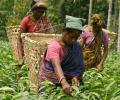
It's a busy season for Indian producers of orthodox tea. As Sri Lanka, the world's largest supplier of orthodox tea, struggles with its worst economic crisis, a window of opportunity has opened up in neighbouring India. Calls to Indian planters and exporters from foreign buyers of Sri Lankan orthodox tea are pouring in and the buoyant sentiment is reflecting in prices at auction centres. Orthodox tea refers to loose-leaf tea which is produced using traditional or orthodox methods such as plucking, withering, rolling, oxidation and drying.
 © 2026 Rediff.com - Advertise with us - Disclaimer - Privacy Policy - Sitemap - Feedback - About us - Terms of use - Grievances